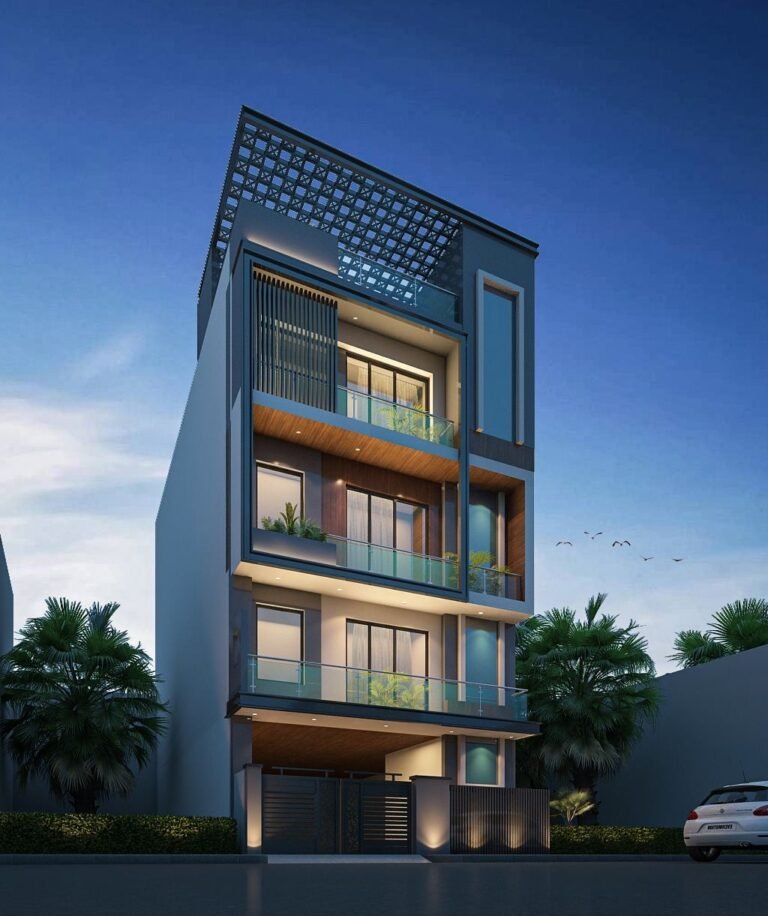
Building a House in Jharkhand (2026): Ranchi, Jamshedpur, Dhanbad, Bokaro and Hazaribagh Costs, Rock, Rain and Paperwork
Real 2026 per sq ft rates for five Jharkhand cities, why steel and sand are cheaper here, what the rock under Ranchi costs, the BCCL check every Dhanbad plot needs, and how to monsoon-proof a house.
Half of GharVistaar’s engineering team grew up in Jharkhand, and half of the phone calls we get from Ranchi start with a price somebody was quoted at a tea stall: ₹1,200 a square foot, sometimes ₹1,000. It is not a lie exactly. It is the price of a house with 8 mm bars where 12 mm should be, plaster over unfilled joints, and no waterproofing on a terrace that will get 1,400 mm of rain a year. This is the guide we wish those callers had read first: what a properly built house costs in Ranchi, Jamshedpur, Dhanbad, Bokaro and Hazaribagh in 2026, what is genuinely cheaper here than in Delhi, and what is not.
Key takeaways
Standard-quality construction in Jharkhand costs ₹1,850–2,000 per sq ft in 2026; basic from ₹1,480, premium to ₹2,700.
Jharkhand is 12–18% cheaper than NCR because steel is made here, foundations sit on shallow rock and labour is local.
Rock is the surprise: chiselling can add ₹40,000–1.2 lakh to a Ranchi footing. Get the plot inspected before you accept a rate.
Dhanbad plots need a BCCL mining-lease check; Jamshedpur’s Tata lease areas and Bokaro’s SAIL township have their own sanction routes.
The heaviest monsoon in our network means plinth beams, DPC and tested waterproofing are not optional.
Construction cost per sq ft in Jharkhand, city by city (2026)
GharVistaar turnkey rates, built-up area, September 2026.
Independent trackers put Ranchi’s standard rate near ₹1,943 per sq ft with premium around ₹2,620, and Jamshedpur at roughly ₹2,010; local builder guides quote ₹1,600–2,100 for mid-quality work with branded steel and ₹2,300–2,750 for premium finishes. Our rates sit in the same band. Anything under ₹1,400 for a finished house is either an “up to plaster” price or a house you will be repairing by year five.
Why it is cheaper than NCR — and where it is not
Steel. Tata Steel is 130 km from Ranchi and inside Jamshedpur; SAIL is in Bokaro. Fe500D TMT lands at ₹58/kg in Jamshedpur and ₹60 in Ranchi against ₹63–64 in Noida and Gurugram. On 4 kg per sq ft that alone is ₹20–24 per sq ft. Sand and aggregate. Damodar and Subarnarekha sand at ₹2,250–2,330 a tonne versus ₹2,600+ in NCR; stone aggregate from local quarries at ₹1,380–1,442. Bricks. ₹7 against ₹9 in Delhi. Labour. Masons and bar-benders are local and 20–30% cheaper than NCR. Foundations. Rock at 1–1.5 m means shallow footings and less concrete.
What is not cheaper: cement (₹403 a bag, within ₹5–10 of NCR), branded sanitaryware, tiles, UPVC windows, electricals and hardware — all of which are freighted in from the same factories at the same or slightly higher price. That is why the gap between Jharkhand and NCR narrows as you move from basic to luxury: a luxury house is mostly imported finishes, and those cost the same everywhere.
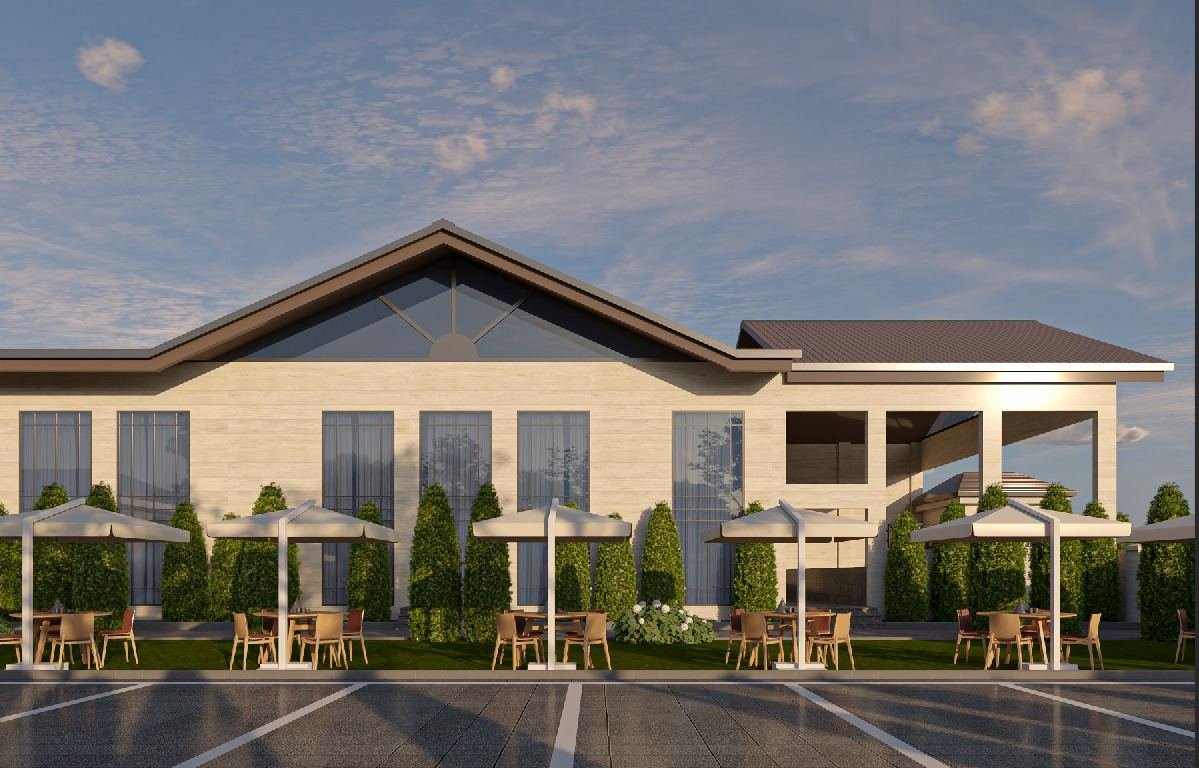
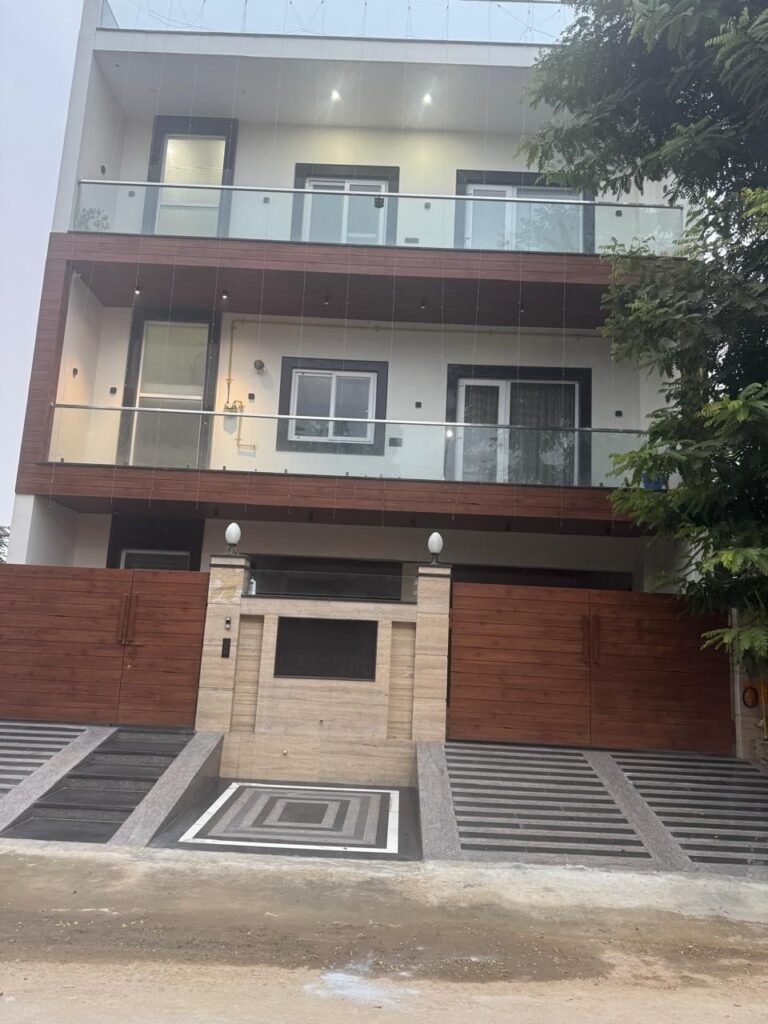
A G+1 duplex elevation — the most requested home on 5–10 decimal plots in Ranchi and Hazaribagh.
The rock under Ranchi
Kanke Road, Morabadi, Harmu, Bariatu, Ratu Road — dig 1 to 2 m almost anywhere and you hit weathered granite or hard laterite. The good news is bearing capacity: isolated footings at 1–1.5 m carry a G+2 comfortably, and you rarely need a raft. The bad news is the JCB stops and the breaker starts. Chiselling a footing pit through rock costs ₹3,000–6,000 per pit; a G+1 with 16 columns can add ₹40,000–1.2 lakh. Contractors who quote without visiting simply do not include it, then present it as an “extra” at excavation. We inspect, price the rock work and put it in the BOQ before you sign. The Harmu river belt and the Hinoo lowland are the exceptions — softer ground, deeper footings, sometimes a raft.
Dhanbad: check the mine before the map
Dhanbad sits on the Jharia coalfield. Hirapur, Bank More and Saraidhela are stable; Jharia, Katras, Bhaga and parts of Kenduadih sit over old underground workings that are still subsiding. Before we design any foundation within 500 m of a BCCL lease we pull the lease map and run a geotechnical bore — a ₹15,000 test that has told more than one client to buy a different plot. The Dhanbad Municipal Corporation sanctions plans, but MADA and BCCL NOCs enter the picture in the mining belt.
Jamshedpur and Bokaro: company-town paperwork
Inside Tata Steel’s command area (Bistupur, Kadma, Sonari, parts of Sakchi) you build on lease land; plan sanction goes through JNAC with Tata Steel UISL clearances, and there are architectural controls on elevations in some zones. Outside it — Mango, Dimna, Adityapur, Govindpur — Mango Nagar Nigam or Adityapur Municipal Corporation sanction under the Jharkhand Building Bye-Laws 2016 on freehold plots. Bokaro is split the same way: SAIL Town Administration inside Sectors 1–12 and Cooperative Colony, Chas Municipal Corporation for the freehold town. Knowing which counter to file at saves a month.
Monsoon-proofing: the part that decides how long the house lasts
Hazaribagh and Ranchi get some of the heaviest rain in our network and laterite swells and shrinks with moisture. Four things we never skip in Jharkhand: a continuous plinth beam tying every column; a DPC (damp-proof course) at plinth; sloped terraces (1:100 minimum) with a chemical membrane and a screed, water-tested for 48 hours before tiling; and exterior weather-proof paint over a properly cured plaster. These add perhaps ₹30–50 per sq ft and are the difference between a 40-year house and a 12-year one.
Material for that house: about 1,132 bags of cement (₹456,196), 11,320 kg of Tata Tiscon (₹679,200), 22,640 bricks, 140 tonnes of sand and 170 tonnes of aggregate.
Choosing a builder in Jharkhand
Ask where the steel comes from (Tata / SAIL, with a mill certificate, or re-rolled bar from a local furnace?), whether cube tests are done, whether the terrace will be water-tested, and for the address of a house they built five years ago. Then go and look at the terrace of that house after a rain. Our Ranchi, Jamshedpur, Dhanbad, Bokaro and Hazaribagh pages carry rates, localities and the authority for each city; the calculator is pre-loaded with Jharkhand material rates.
Locality notes across the five cities
Ranchi
Kanke Road, Morabadi and Bariatu are the premium plotted belts — rock at a metre, wide roads, RRDA-approved layouts. Harmu, Argora and Pundag are the mid-market with cooperative colonies. Namkum, Tatisilwai and the Ormanjhi highway side are where 10-decimal plots are still affordable; access roads can be kachcha, so material scheduling matters. Ratu Road and Kathal More are dense; expect neighbour negotiations on stacking.
Jamshedpur
Kadma, Sonari and Bistupur inside the Tata command area: firm laterite at 1.2–1.8 m, JNAC sanction with UISL clearance, elevation controls in some zones. Mango, Dimna and Govindpur outside: freehold, Mango Nagar Nigam, and softer river-side silt near the Subarnarekha and Kharkai that needs deeper footings and a plinth beam.
Dhanbad
Saraidhela, Bartand and Hirapur are the safe, growing belts. Anything near Jharia, Katras, Bhaga or Kenduadih gets the BCCL lease check and a geotechnical bore before we price it. Sindri and Govindpur are the value end with good road access off GT Road.
Bokaro
Chas, Chira Chas and Ritudih are freehold under Chas Municipal Corporation on excellent red laterite; Sectors 1–12 and Cooperative Colony are SAIL lease with Town Administration rules. Sand from the Damodar and steel from the plant make Bokaro our cheapest material market.
Hazaribagh
Matwari, Korrah and Nawabganj sit on shallow rock; Okni and Demotand are softer black soil. Plots along Barkagaon Road, Ranchi Road and Canary Hill Road are the active belts. Heaviest rain in our network: plinth beams, DPC and sloped, tested terraces are non-negotiable.
Orientation and Vastu on plateau plots
Jharkhand plots are often larger and less hemmed in than NCR plots, which means the house can be oriented properly rather than squeezed to the road. We put the main entrance east or north where the road allows, the kitchen south-east, the master bedroom south-west and the pooja north-east — the Vastu conventions most families here ask for — and keep the long face of the house north-south so the summer sun hits the short walls. On a sloping plateau plot, the level difference becomes a plinth on the low side and a garden terrace on the high side rather than a filled-and-compacted problem.
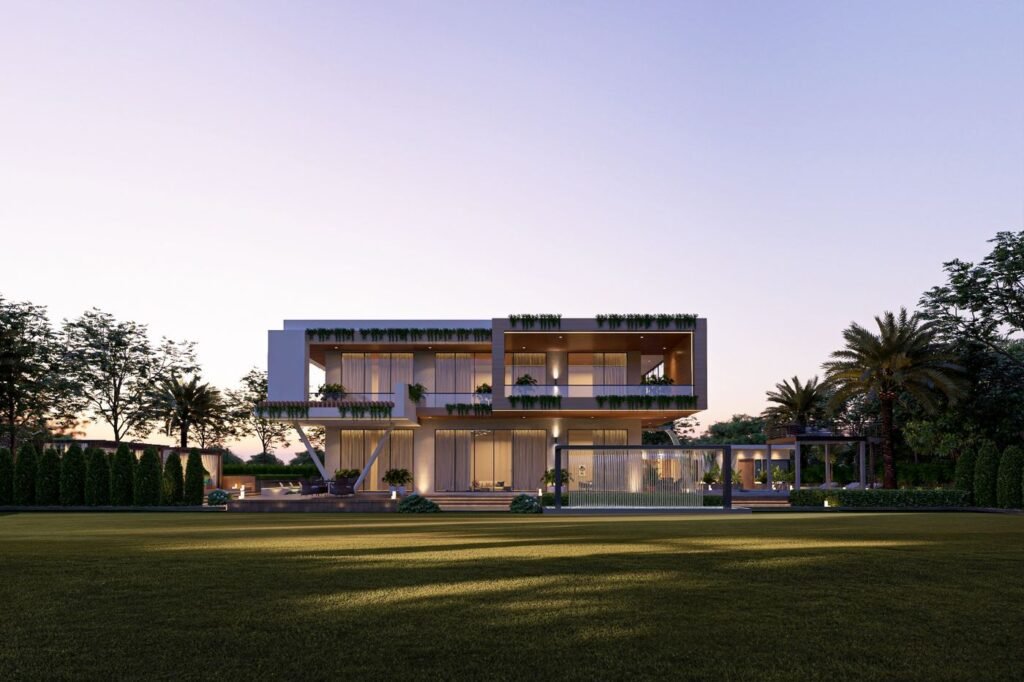
Flat-roof modern homes work well on the plateau: the terrace becomes the family's evening room from October to March.
Planning around the monsoon
Month
What to do in Jharkhand
June – September
Design, soil test, sanction, material contracts. No excavation — pits flood and rock-cutting is miserable.
October – November
Excavation, rock chiselling, footings, plinth beam, backfill.
December – February
Columns and slabs; ideal curing weather.
March – May
Brickwork, plaster, MEP, terrace waterproofing (test it before the first rain).
June onwards
Interior finishing under a roof: flooring, doors, paint, fittings.
Questions Jharkhand clients ask us
Why not just use the cheaper local steel?
Re-rolled bar from small furnaces around Giridih and Ramgarh is sold as “TMT” at ₹50–54/kg. It has no mill certificate, uneven strength and poor ductility. Tata Tiscon, JSW Neosteel or SAIL Fe500D at ₹58–61 is the only steel we put in a house; the difference on a G+1 is ₹30–40,000.
Is RCC / RRDA sanction really necessary in Ranchi?
Yes, and increasingly enforced. Unauthorised construction cannot get a completion certificate, a permanent JBVNL connection or a bank loan, and the municipal corporation has started acting on complaints.
Do you work in Ramgarh, Khunti, Gumla or Chaibasa?
Within about 100 km of Ranchi, Jamshedpur or Hazaribagh, yes — with a small remote-site surcharge for engineer travel and material freight.
Can I build a G+2 on 3 decimal?
Yes: 3 decimal is 1,307 sq ft; at 65% coverage that is 850 sq ft per floor and a very livable 2 BHK per floor, or a duplex plus a rental unit.
What about a borewell?
Most plots outside the municipal supply need one: ₹80,000–1.5 lakh for a 200–300 ft bore with submersible pump and tank on the plateau, where rock makes drilling slower but the water is reliable.
If you are building on family land
Many of our Jharkhand clients build on land that has been in the family for two or three generations — which means the paperwork is older than the building rules. Before design, get the khatiyan and the latest rent receipt, a mutation in the current owner’s name, and a boundary survey by an amin; disputed boundaries with a cousin are the most common reason a Ranchi site stops. If the land is recorded as agricultural, conversion under the Jharkhand Land Revenue rules comes before sanction. None of this is hard; all of it takes weeks, and it is better spent during the monsoon than while a labour gang waits.
Once the paper is clean, the plateau is one of the best places in India to build: rock that carries anything, local steel, cheap sand and a climate that cures concrete beautifully from October to March. Build it right — plinth beam, DPC, tested terrace — and the house outlasts the loan by decades.
Sumit Chauhan (projects) and Md Parvej Ansari (engineering, NIT Jamshedpur). We build houses, builder floors, villas and commercial buildings across Delhi NCR and Jharkhand. Every number in this article comes from our own BOQs and site data, cross-checked with the sources listed at the end.
Live 2026 construction rates for Noida, Greater Noida, Delhi, Gurugram, Ghaziabad and Faridabad, what moves them, where the money goes, and the 12–20% that never appears in a per-sq-ft quote.
The two weeks after handover, what to sell before you pack, how to choose a mover, moving-day order, the paperwork everyone forgets, and a realistic budget — from a builder who watches families move in every month.
The same 1,500 sq ft house under three contract types, with real final costs. Why the cheapest quote is rarely the cheapest house, and the six things a turnkey BOQ must contain.